Winter riding brings shorter days, wet roads, darker trails, and reduced visibility. The right helmet light can help you stand out while giving you more confidence during commutes, training rides, and off-road adventures.
We selected 10 helmet lights spanning bicycles, e-bikes, motorcycles, and trail riding, with attention to brightness, mounting, runtime, weather protection, and everyday usability.
Best 10 Helmet Lights for Winter Riding Picks for 2026
All-Weather Visibility Pick
2-in-1 Rechargeable Helmet Light

- 200-lumen front light plus tail light
- IP66 waterproof and 75 grams
- Five modes with independent controls
Best For: Front-and-rear visibility in wet, low-light rides
Minimalist Helmet Match
Thousand Magnetic Helmet Light

- Designed for Heritage 2.0 helmets
- Magnetic mounting and USB-C charging
- 40 lumens with three modes
Best For: Compatible urban riders wanting a lightweight visibility light
High-Output Trail Choice
BrightRoad 850-Lumen Helmet Light

- 850 lumens with stated 650-foot range
- Five modes and 100-degree adjustment
- Battery indicator and one-year warranty
Best For: Dark trails where forward illumination is the priority
Smart Motorcycle Visibility Pick

- 100-LED rear light at eye level
- Wireless brake and deceleration detection
- USB-C charging with 1.5-hour full charge
Best For: Motorcyclists seeking automatic rear visibility without wiring
Best All-Round Visibility

- Front and rear LEDs in one unit
- IPX6 water resistance for wet rides
- Up to 43 hours of mode-dependent runtime
Best For: Commuters and everyday cyclists needing front-and-rear visibility
Best for Dark Trails
Dango Navigator 2,100-Lumen Trail Light
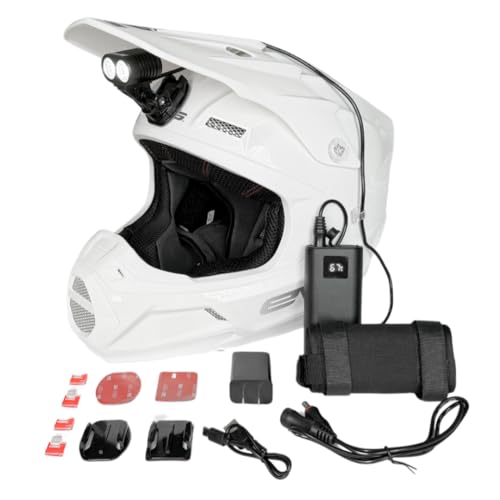
- 2,100-lumen-rated Cree LED output
- Up to 12 hours on low mode
- External battery includes digital readout
Best For: Off-road riders tackling dark trails and winter terrain
Best Compact Commuter Pick
Rechargeable Front-and-Rear Helmet Light

- Six front-and-rear lighting modes
- IPX6-rated for rain and winter use
- Up to 22 hours of USB-rechargeable runtime
Best For: Commuters wanting a compact, versatile safety light
Compact Weatherproof Pick
Rechargeable Helmet Tail Light

- Three red LED modes for visibility
- IPX6 waterproof and Velcro-mounted
- 8–10-hour runtime; weighs 0.6 oz
Best For: Lightweight winter commuting and night riding
Simple Stick-On Option
Small USB-Rechargeable Helmet Light

- Multiple steady and blinking modes
- IPX6 waterproof ABS construction
- Very light at 5.7 grams
Best For: Tool-free helmet and tail-light placement
Extended-Runtime Upgrade
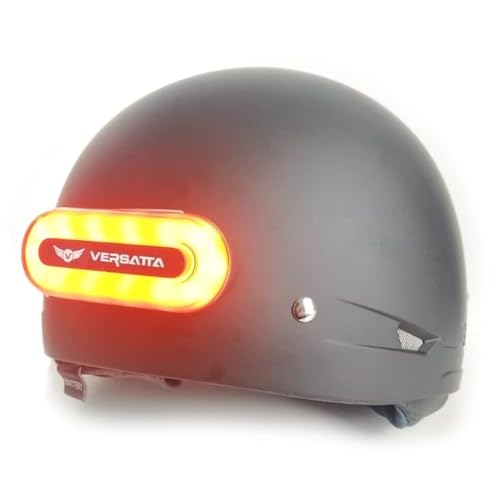
- 14 LEDs, 700-lux claim, and four modes
- Up to 12 hours from a 650mAh battery
- IPX6 protection with Type-C charging
Best For: Long winter rides and higher rear visibility
All-Weather Visibility Pick – 2-in-1 Rechargeable Helmet Light
For riders comparing helmet lights for winter riding, this 2-in-1 option combines front and rear lighting in one lightweight unit. Its independently controlled lights, five modes, USB charging, and IP66 waterproof rating make it a flexible choice for wet, low-light rides.
Best For: Commuters and cyclists who want front-and-rear visibility, multiple flash modes, and strong rain protection.
Pros:
- Combines a 200-lumen front light with a tail light for 360-degree warning visibility.
- Front and rear lights can be operated or adjusted independently.
- IP66 waterproof construction and a lightweight 75-gram design suit variable weather.
- USB rechargeable, with stated runtime of 8–36 hours depending on mode.
Cons:
- The notes clarify that it is primarily designed to help riders stay seen, not provide 200 meters of road illumination.
- The supplied details do not specify helmet compatibility beyond standard mounting versatility.
This is a practical visibility-focused choice when winter riding means rain, splashes, and changing light conditions. Choose it over a single front light if rear awareness is equally important.
Minimalist Helmet Match – Thousand Magnetic Helmet Light
Among helmet lights for winter riding, the Thousand Magnetic Helmet Light is a compact, low-output option designed specifically for the Heritage 2.0 helmet. Magnetic mounting, three light modes, and USB-C charging keep the setup simple for riders who prioritize convenience.
Best For: Thousand Heritage 2.0 owners seeking a lightweight, easy-to-remove visibility light for urban riding.
Pros:
- Magnetic mounting supports quick installation and removal.
- USB-C charging is convenient for regular use.
- Three light modes offer basic output flexibility.
- Compact 0.05-kilogram design adds little weight to the helmet.
Cons:
- Its 40-lumen peak brightness is modest compared with higher-output helmet lights.
- IP54 resistance is lower than the IP66 rating offered by some alternatives.
- The product is specified for the Heritage 2.0 helmet, limiting compatibility.
This light makes the most sense for compatible helmet owners who need a discreet visibility aid rather than a powerful trail headlight. Its magnetic design is especially useful when you remove the light frequently.
High-Output Trail Choice – BrightRoad 850-Lumen Helmet Light
For riders who need more forward illumination from helmet lights for winter riding, the BrightRoad delivers a stated 850 lumens with an 85-degree floodlight and 650-foot range. It also includes five modes, USB charging, an adjustable anti-slip mount, and a battery indicator.
Best For: Mountain bikers and trail riders who want a powerful front beam with adjustable positioning.
Pros:
- 850-lumen output, an 85-degree floodlight, and a stated 650-foot range support dark trail riding.
- Five modes provide lighting flexibility.
- 100-degree adjustable mounting angle and anti-slip pad help keep the light positioned.
- Battery indicator, USB fast charging, and a one-year warranty add convenience and support.
Cons:
- The listed IPX1 rating indicates limited water protection compared with more weather-sealed options.
- The product is a front light, so a separate rear light may be needed for all-around visibility.
- The supplied notes do not identify included accessories beyond the light itself.
This is the strongest illumination-focused option in the group, but winter riders should consider the limited stated water protection when planning for rain or wet trails. It is best suited to riders who value beam distance over full weather sealing.
Smart Motorcycle Visibility Pick – Brake Free Smart Helmet Light
For motorcycle-focused helmet lights for winter riding, the Brake Free is a rear-facing smart light designed to improve visibility at eye level. Its wireless brake detection, 100 LEDs, USB-C charging, and weather-resistant construction provide a self-contained alternative to wired motorcycle lighting.
Best For: Motorcycle riders who want an automatically triggered rear brake light without wiring or an app.
Pros:
- Uses 100 ultra-bright LEDs positioned at eye level to improve rear visibility.
- Smart sensors detect braking, downshifting, and engine braking without wiring.
- USB-C charging reaches full power in a stated 1.5 hours.
- Includes universal and XL mounts, an installation template, and a one-year manufacturer warranty.
Cons:
- It is a rear light rather than a forward headlight, so it does not illuminate the road ahead.
- The notes describe it as weather resistant but do not provide a specific IP rating.
- A single listed setting offers less manual lighting flexibility than multi-mode lights.
This is a specialized safety upgrade for motorcyclists rather than a general cycling headlight. Its automatic deceleration detection is the key advantage for riders who want extra rear visibility without adding wiring.
Best All-Round Visibility – Brightside 360° Helmet Light
For riders comparing helmet lights for winter riding, the Brightside offers front and rear illumination in one lightweight, weather-resistant unit. Its elevated helmet position and wide-angle LEDs are designed to improve visibility during commuting, early-morning rides, and poor weather.
Best For: Road cyclists, commuters, gravel riders, and MTB riders who want one rechargeable light for front-and-rear visibility.
Pros:
- Combines a bright white front light with a red rear light for 360-degree visibility.
- IPX6 water resistance suits rain, sweat, and winter riding conditions.
- Seven modes, memory mode, and a battery fuel gauge provide flexible operation.
- Runs from 2.5 to 43 hours depending on mode and recharges in about three hours.
Cons:
- The maximum runtime varies considerably by lighting mode.
- At 68 g, it adds some weight to a helmet compared with smaller rear-only lights.
The Brightside is a practical choice when all-around visibility matters more than maximum trail illumination. Its secure mounting options, rechargeable battery, and IPX6 rating make it well suited to everyday winter commuting and mixed-weather cycling.
Best for Dark Trails – Dango Navigator 2,100-Lumen Trail Light
For helmet lights for winter riding on unlit trails, the Dango Navigator prioritizes powerful forward illumination. Its Cree LEDs, adjustable brightness, external battery pack, and universal mounting options make it suited to demanding off-road rides and outdoor use.
Best For: Mountain bikers, snowmobile riders, motocross users, and other off-road riders who need a high-output trail light.
Pros:
- Uses 2,100-lumen-rated Cree LEDs with three adjustable brightness settings.
- External battery pack provides up to three hours on high or 12 hours on low.
- Digital battery readout helps monitor remaining power.
- Includes cable extension, mounting hardware, charger, and EVA travel case.
Cons:
- The 1.4-pound weight is substantially heavier than compact commuter helmet lights.
- High-mode runtime is limited to up to three hours.
- Its external battery and cable require more setup than an integrated light.
The Navigator is the strongest option here for riders who need to illuminate a dark trail rather than simply be seen. The added battery weight and cable management are reasonable trade-offs for its high output, flexible mounting, and power-bank functionality.
Best Compact Commuter Pick – Rechargeable Front-and-Rear Helmet Light
This compact rechargeable light is a practical option for helmet lights for winter riding, especially when you want visibility without carrying a bulky setup. It offers separate front and rear modes, flexible mounting, and an IPX6 rating for rain and winter weather.
Best For: Commuters and recreational cyclists who want a compact light that can move between a helmet, handlebar, or seat.
Pros:
- Front white and rear red lights offer six steady and flashing combinations.
- IPX6 waterproofing supports use in rain and winter weather.
- USB rechargeable 500 mAh battery lasts up to 22 hours.
- Quick-connect mount and two rubber straps support flexible installation.
Cons:
- The six-month manufacturer warranty is shorter than the warranty listed for some alternatives.
- Its 22-hour maximum runtime depends on the selected mode.
- The supplied notes do not specify a lumen output.
With its small aluminum body and adaptable mounting system, this light suits riders who value convenience and portability. It is a sensible everyday safety light, though riders needing strong trail illumination may prefer a higher-output design.
Compact Weatherproof Pick – Rechargeable Helmet Tail Light
For riders comparing helmet lights for winter riding, this compact rear safety light offers a practical balance of visibility, weather resistance, and low weight. Its four red LEDs provide steady, slow-flash, and fast-flash settings, while the IPX6-rated shell is designed for rainy conditions.
Best For: Riders who want a lightweight, rechargeable helmet light with simple Velcro installation and multiple visibility modes.
Pros:
- Three lighting modes from four high-brightness red LEDs
- IPX6 waterproof ABS shell for wet-weather riding
- Runs for approximately 8–10 hours after a two-hour charge
- Tool-free Velcro mounting and a compact 0.6-ounce design
Cons:
- USB charging cable is included, but the notes do not specify a charging adapter
- Designed primarily as a rear red visibility light rather than a forward headlamp
This is a sensible choice when you want an unobtrusive warning light that can move between a helmet, backpack, bicycle, or motorcycle. The runtime and IPX6 protection make it well suited to regular winter commutes and night rides.
Simple Stick-On Option – Small USB-Rechargeable Helmet Light
This small rear red light is a straightforward option for helmet lights for winter riding, especially if you value tool-free installation. It uses an adhesive mount, includes extra Velcro, and has an IPX6 waterproof ABS design intended to handle rain or snow splashes.
Best For: Cyclists and motorcyclists seeking an easy-to-install, lightweight warning light for low-light rides.
Pros:
- Bright LED output with multiple modes, including steady and blinking patterns
- IPX6 waterproof construction for wet conditions
- USB-rechargeable battery and included charging cable
- Adhesive mounting works on helmets and can also be used as a bike or motorcycle tail light
Cons:
- The supplied notes do not state an exact runtime
- Adhesive mounting may be less convenient to reposition than a removable strap system
At just 5.7 grams, this light adds very little weight and offers flexible placement. It is a practical budget-style visibility accessory when you need a compact red light for mixed outdoor use.
Extended-Runtime Upgrade – 14-LED Helmet Safety Light
For winter riders who prioritize stronger rear visibility and longer battery life, this upgraded model stands out among helmet lights for winter riding. It combines 14 LED lamp beads, a claimed 700-lux output, four modes, and a 650mAh rechargeable battery rated for up to 12 hours of use.
Best For: Frequent cyclists and motorcyclists who want extended runtime, broad helmet compatibility, and a brighter multi-mode rear light.
Pros:
- 14 LED beads with four modes and a claimed 700-lux output
- 650mAh battery provides up to 12 hours of runtime when fully charged
- IPX6 water resistance and a side-positioned charging port
- Curved ABS design fits various helmets and includes extra Velcro
Cons:
- Charging for at least two hours before use is recommended
- At 2.89 ounces, it is heavier than the other listed options
- It is a rear safety light, not a forward-illuminating headlamp
This is the strongest fit for riders who do longer winter outings or do not want to recharge after every few rides. Its larger battery and 14-LED layout add useful visibility, while the curved shell and Velcro support flexible mounting.
How We Picked the Best Helmet Lights for Winter Riding
We focused on the features that matter most in cold, dark, and changeable conditions: dependable visibility, secure helmet attachment, rechargeable power, useful beam or flash modes, and resistance to rain and road spray. We also considered whether each light is designed primarily for front illumination, rear warning visibility, all-around signaling, or motorcycle use.
Because helmet shapes and riding styles vary, no single light is ideal for everyone. A compact rear light may be perfect for an urban cyclist, while a high-output trail light or smart motorcycle brake light may better suit a different type of rider.
Quick Comparison
- Best for everyday bicycle visibility: Choose a compact rechargeable light with front, rear, or 360-degree visibility and a simple bracket or strap.
- Best for commuting in traffic: Look for multiple flash patterns, strong side visibility, and a secure fit that stays visible beneath winter layers.
- Best for trail riding: Prioritize high output, a focused beam, battery indicators, and a mount that resists vibration.
- Best for motorcycles: Consider weatherproof warning lights or smart brake-sensing systems designed for motorcycle helmet use.
Key Buying Factors for Helmet Lights for Winter Riding
Brightness and Beam Pattern
More lumens do not automatically mean better safety. A front light should illuminate the path without causing excessive glare, while a rear or warning light needs a noticeable flash pattern. Side visibility is especially valuable at intersections.
Battery Life and Charging
Cold temperatures can reduce battery performance, so choose more runtime than your typical ride requires. USB-C charging is convenient, but check whether the port has a weather cover and whether the light can display remaining battery power.
Weather Resistance
Winter riding exposes equipment to rain, slush, spray, and grit. An IP rating is useful when provided, but also inspect the charging-port protection and switch design. A light that is water resistant but difficult to operate with gloves may be frustrating in practice.
Mounting and Helmet Compatibility
The mount should hold firmly without damaging the helmet or interfering with vents, straps, or a visor. Magnetic, bracket, adhesive, and strap mounts each have advantages. Confirm compatibility before buying, particularly for motorcycle and specialty helmets.
Controls and Visibility Modes
Gloves make tiny buttons difficult to use. Favor straightforward controls and modes you can select quickly. Steady, pulsing, and alternating patterns can serve different conditions, but avoid relying on a light as a substitute for legally required vehicle lighting.
Who Should Buy Which Helmet Lights for Winter Riding?
Daily commuters should choose a lightweight rechargeable light with dependable rear or 360-degree visibility and a secure, easy-to-remove mount. Road cyclists and e-bike riders may benefit from brighter front lighting, multiple modes, and strong side visibility for mixed traffic.
Mountain and dirt-bike riders should prioritize high output, impact-resistant mounting, battery readouts, and enough runtime for the full outing. Motorcycle riders should look for weatherproof helmet-specific warning or brake lights, especially systems that improve rear visibility without adding excessive bulk.
Whatever your riding style, test the fit before riding at night, keep the lens clean, and charge the light before every longer winter trip.