Stairs can become a daily safety challenge when balance, leg strength, or endurance changes. The right mobility aid can make moving between floors more manageable while reducing unnecessary strain.
This roundup compares 10 stair climbers for seniors, from permanent straight-stair lifts to portable canes, walkers, and powered stair-climbing chairs. Use the guide below to match the design, capacity, and support level to the user and home.
Best 10 Stair Climbers for Seniors Picks for 2026
Best Permanent Solution

- Battery powered with DIY installation
- 350-lb capacity and 15 ft. of track
- Swivel seat, safety sensor, and call stations
Best For: Seniors needing seated assistance on a straight staircase
Best Portable Support
20-Level Stair Climbing Assist Cane
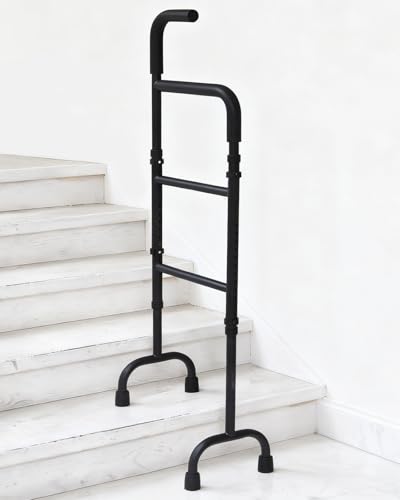
- No drilling or permanent installation
- 20 height-locking positions
- Wide quad base with non-slip tips
Best For: Movable balance support around household stairs
Best Powered Mobility Option
Foldable Stair-Climbing Wheelchair

- 480-lb maximum weight recommendation
- Slow, button-activated stair movement
- Foldable and battery powered
Best For: Seated mobility with caregiver assistance on straight stairs
Best for Home Fitness

- Adjustable three-level handlebar
- Low-impact, quiet stair-climbing motion
- 300-lb capacity with folding design
Best For: Low-impact stair-climbing exercise at home
Best Powered Option
Electric Stair-Climbing Wheelchair

- Attendant-operated powered stair climbing
- 480-pound maximum load capacity
- Foldable with three-speed control
Best For: Assisted stair transfers and caregiver-supported mobility
Best Adjustable Cane
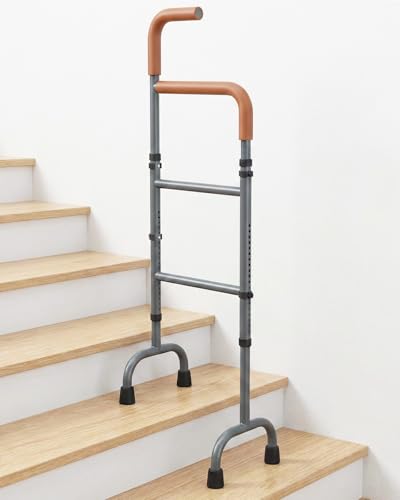
- 20 height settings from 35 to 45 inches
- Four non-slip stabilizing feet
- Lightweight 4.4-pound design
Best For: Portable manual assistance on varied stair heights
Best Wheelless Walker
Foldable Stair Climbing Walker

- No wheels for added stair stability
- 16 height settings up to 38 inches
- 6.2-pound aluminum frame
Best For: Controlled stair support and uneven-surface mobility
Most Versatile
MMingo Adjustable Stair Assist Cane

- Works as both a cane and stair-assist aid
- 10 height settings from 28.8 to 37.8 inches
- Six-prong base supports up to 300 pounds
Best For: Users seeking one adjustable aid for walking and stairs
Best Adjustable Fit
Adjustable-Width Stair Climbing Cane

- Adjusts in both height and width
- Wide base helps reduce wobbling
- Supports up to 300 pounds
Best For: Users needing a portable aid for varied stair sizes
Best Heavy-Duty Design
Half-Step Stair Climbing Assist Cane

- Iron and stainless-steel construction
- 10 height settings from 78 to 99 cm
- Anti-skid pads and rubber sleeves
Best For: Users prioritizing durable metal stair support
Best Permanent Solution – AmeriGlide Rave 2 Stair Lift
For seniors who need regular help on a straight staircase, the AmeriGlide Rave 2 is a battery-powered stair lift designed for DIY installation. It includes 15 feet of track and supports up to 350 pounds.
Best For: Seniors seeking a permanent, seated solution for most straight staircases.
Pros:
- Battery powered and designed for self-installation.
- 350-pound maximum weight capacity.
- Swivel seat, flip-up seat and armrests, safety sensor, and wireless call stations.
Cons:
- Designed for straight staircases rather than spiral stairs.
- DIY installation requires suitable staircase conditions and setup.
This is the most home-integrated option in the group, offering seated travel and multiple safety features. Confirm that your staircase layout and the included 15-foot track meet your needs before buying.
Best Portable Support – 20-Level Stair Climbing Assist Cane
This portable stair climbing assist cane provides extra balance without permanent installation or wall drilling. Its self-standing design and 20 locking height positions make it a flexible choice for seniors using stairs in different areas of the home.
Best For: Seniors who want a lightweight, movable support aid for indoor stairs, porches, or entryways.
Pros:
- Freestanding design requires no permanent installation.
- 20 height adjustments with a secure pin-lock system.
- Carbon-steel frame, four-foot base, and non-slip tips.
- Soft EVA grips may help reduce hand fatigue.
Cons:
- Requires full assembly before use.
- Recommended for users taller than 5 feet.
- Users with severe mobility impairments should have caregiver or professional assistance initially.
At 4.5 pounds, this cane is easier to reposition than a fixed mobility aid, but it is intended to supplement—not replace—a wall-mounted handrail. Careful initial setup and supervised use are important.
Best Powered Mobility Option – Foldable Stair-Climbing Wheelchair
This powered stair-climbing wheelchair is designed to help users and caregivers navigate conventional straight stairs with slow, button-activated movement. Its foldable frame, battery power, and 480-pound capacity make it a heavy-duty alternative to a permanent stair lift.
Best For: Seniors who need powered, seated stair assistance on straight indoor or outdoor stairs.
Pros:
- Supports up to 480 pounds.
- Battery powered with controlled button-activated movement.
- Foldable design with hand brake and push handles.
- Can also be used on flat surfaces and uneven terrain.
Cons:
- Not suitable for spiral stairs.
- At 70 pounds, it may be heavy for some caregivers to move.
- Requires a caregiver or operator to guide the chair.
This model offers strong capacity and portability for situations where a fixed stair lift is impractical. Before purchase, verify that the straight stairway and available operator support are appropriate for its use.
Best for Home Fitness – HXD-ERGO Stair Stepper
The HXD-ERGO is an exercise machine rather than a mobility aid, simulating stair climbing for low-impact home workouts. Its adjustable handlebar, triangular steel structure, and 300-pound capacity provide added support during cardio and strength training.
Best For: Seniors and beginners looking for a low-impact indoor stair-climbing workout, subject to their individual fitness needs.
Pros:
- Three adjustable handlebar height levels.
- Low-impact motion designed to be gentler on knees.
- Quiet operation with a smart LCD and folding design.
- Supports up to 300 pounds.
Cons:
- It does not provide transportation up an actual staircase.
- Its 72-inch height may require careful placement and ceiling clearance.
- Exercise suitability varies for users with mobility or joint concerns.
Choose this stepper when the goal is improving fitness rather than overcoming stairs in the home. The adjustable support and low-noise operation are useful, but users should select an intensity appropriate to their abilities.
Best Powered Option – Electric Stair-Climbing Wheelchair
For shoppers comparing stair climbers for seniors, this motorized stair-climbing wheelchair is designed for attendant-operated transfers on stairs. Its powered controls, safety harness, and substantial weight capacity make it a mobility-focused option without permanent installation.
Best For: Seniors who need assisted stair transfers and caregivers who want to reduce lifting and carrying.
Pros:
- Electric stair-climbing design helps reduce strenuous lifting by caregivers.
- Supports up to 480 pounds and includes a safety harness.
- Three-speed control, battery-level display, and lockable rear wheels support controlled use.
- Folds for storage and transport without home renovation or installation.
Cons:
- Requires an attendant to operate; it is not presented as a self-propelled stair device.
- Its powered wheelchair format is larger and more specialized than a cane or walker.
This is the most comprehensive choice in the group for users who need powered assistance and caregiver support. Its foldable design adds practicality for homes, hospital visits, and travel.
Best Adjustable Cane – 20-Level Stair Assist Cane
Among stair climbers for seniors, this adjustable assist cane offers a lightweight, compact approach for users who can manage stairs with hands-on support. Its height range and four stabilizing feet are designed to adapt to different stair dimensions and surfaces.
Best For: Seniors seeking a portable, manually positioned aid for standard or non-standard stairs.
Pros:
- Twenty height settings from 35 to 45 inches accommodate varied step heights.
- Four non-slip rubber feet are designed for wood, tile, stone, and other stair materials.
- At about 4.4 pounds, it is easier to carry and store than bulky stair equipment.
- Supports up to 300 pounds and has an anti-slip foam handle.
Cons:
- Requires the user to reposition the cane between steps rather than providing powered climbing.
- The supplied instructions caution users not to remove the white plastic plug in the smaller tube.
This cane is a practical fit when portability and adjustability matter most. Users should practice positioning it securely and confirm that its height settings match their staircase before regular use.
Best Wheelless Walker – Foldable Stair Climbing Walker
This foldable walker takes a stable, wheelless approach to stair mobility. For seniors evaluating stair climbers for seniors, its height-adjustable legs and no-wheel design can provide more control on stairs and uneven ground than a rolling walker.
Best For: Adults or seniors who need a lightweight walker with secure, wheel-free footing on stairs.
Pros:
- Wheelless design helps prevent unwanted rolling on stairs and uneven surfaces.
- Sixteen height adjustments accommodate users from 7.8 to 38 inches.
- Light aluminum construction weighs 6.2 pounds while supporting up to 300 pounds.
- One-click folding supports compact storage and transport.
Cons:
- Without wheels, it must be lifted or repositioned as the user advances.
- It is intended for stair use and stable support, not powered stair climbing.
This walker suits users who prioritize stability and control over rolling convenience. Its compact folding design and broad height range make it useful for daily mobility across stairs, floors, and uneven outdoor surfaces.
Most Versatile – MMingo Adjustable Stair Assist Cane
For shoppers comparing stair climbers for seniors, the MMingo combines a conventional walking cane with a telescoping stair-assist pedal. Its adjustable height and broad, six-prong rubber base are designed to provide added support on steps, uneven surfaces, and vehicle entry or exit.
Best For: Seniors or users with limited mobility who want one adjustable aid for both everyday walking and stair assistance.
Pros:
- Dual-function design works as a walking cane and stair-climbing aid.
- Ten height settings adjust from 28.8 to 37.8 inches.
- Six-prong, non-slip base supports loads up to 300 pounds.
- Handle strap, padded grip, and locking telescoping pedal add practical usability.
Cons:
- The stair-assist mechanism may require assembly before use.
- Its base is wider than a traditional cane, so storage and maneuvering may take more room.
The MMingo is a practical pick when versatility matters. Its aluminum construction keeps the cane relatively portable, while the adjustable height and stair-focused pedal make it more capable than a standard single-point cane.
Best Adjustable Fit – Adjustable-Width Stair Climbing Cane
Among stair climbers for seniors, this model stands out for adjusting in both height and width. That flexibility is intended to help it fit different stair sizes as well as flat surfaces, while its broad base and padded handle provide additional stability for everyday use or recovery.
Best For: Seniors and post-surgery users who need a portable stair aid with both vertical and horizontal adjustment.
Pros:
- Height and width adjustments accommodate varied steps and flat surfaces.
- Wide anti-slip base distributes weight and helps reduce wobbling.
- Reinforced construction supports up to 300 pounds.
- Padded ergonomic handle and two wide foot pads promote a secure grip.
Cons:
- The product is designed for support, not as a replacement for a permanent stair railing.
- Users should confirm the adjusted width suits their particular staircase.
This cane is a strong choice for households with different stair configurations. Its two-way adjustability offers more fitting flexibility than a height-only stair cane, although careful setup is important for a stable fit.
Best Heavy-Duty Design – Half-Step Stair Climbing Assist Cane
This half-step stair aid is a sturdy option for shoppers evaluating stair climbers for seniors. Its metal construction, adjustable height, and anti-skid base are designed to assist with balance while climbing or descending steps, with a compact pedal intended to fit most stairs.
Best For: Users who prioritize a durable metal frame and adjustable support for stair mobility and balance assistance.
Pros:
- Solid iron and stainless-steel construction is built for durability.
- Ten height settings adjust from 78 to 99 cm.
- Anti-skid pads and rubber protective sleeves help limit slipping.
- Includes installation screws and a screwdriver.
Cons:
- The small pedal may not suit every stair width, so measurements should be checked before purchase.
- Assembly requires tightening screws carefully to reduce base shaking.
- At 2.9 pounds, it is heavier than some lightweight cane designs.
The CSC240409 offers a robust, height-adjustable approach to stair support. Its metal frame favors durability, but buyers should pay close attention to pedal dimensions and inspect the locks and screws regularly before use.
How We Picked These Stair Climbers for Seniors
We selected products across several mobility categories rather than treating every stair aid as interchangeable. The roundup includes a DIY straight stair lift, powered stair-climbing wheelchairs, adjustable assist canes, a stair-climbing walker, and a home stair stepper. We focused on practical factors such as stability, adjustability, portability, stated weight capacity, ease of storage, and whether the product is intended for independent use or caregiver assistance.
Always confirm the manufacturer’s specifications, stair dimensions, installation requirements, and safety instructions before buying. A product that suits standard steps may not work on narrow, unusually deep, curved, or damaged stairs.
Quick Comparison
| Type | Best For | Main Advantage | Important Consideration |
|---|---|---|---|
| Stair lift | Frequent trips between floors | Seated, powered travel | Installation and cost |
| Powered stair chair | Users needing substantial assistance | Motorized stair transport | Caregiver support and charging |
| Assist cane | Users with moderate stability | Portable and comparatively simple | Requires balance and correct placement |
| Stair-climbing walker | Users who need broader support | More contact points than a cane | Stair width and maneuverability |
| Stair stepper | Exercise or controlled home training | Adjustable workout resistance | Not a substitute for a mobility aid |
Key Buying Factors for Stair Climbers for Seniors
Mobility Level and Independence
Choose a cane or walker only if the user can safely lift, place, and control it on each step. Powered chairs and lifts are better suited to people who cannot safely climb while standing, but they may require a trained helper, transfers, or additional space.
Stair Layout and Installation
Check whether the staircase is straight, curved, narrow, steep, or interrupted by landings. A straight DIY lift cannot automatically be adapted to a curved staircase. Portable devices should also be tested for clearance, step depth, handrail placement, and turning room at the top and bottom.
Weight Capacity and Fit
Compare the user’s weight with the stated maximum capacity, leaving a sensible margin rather than buying at the limit. For chairs and walkers, verify seat width, back support, foot placement, harnesses, and the device’s folded dimensions.
Safety and Support
Look for non-slip contact points, stabilizing feet, secure brakes, safety belts, armrests, and clear operating controls. Read the manual and consider an occupational or physical therapist’s assessment, especially after a fall or major change in mobility. These products supplement—not replace—proper lighting, handrails, clear steps, and medical guidance.
Who Should Buy Which Stair Climbers for Seniors?
Choose a stair lift for a household user who needs reliable, repeated access between floors and has a compatible staircase. Choose a powered stair-climbing chair when standing stair use is unsafe and a caregiver can assist with transfers and operation.
Choose an adjustable assist cane for someone with moderate support needs who remains steady enough to coordinate each step. Choose a stair-climbing walker when greater stability is needed, provided the walker fits the staircase and the user can manage it safely.
Choose a stair stepper for controlled exercise—not as a direct replacement for a lift or walking aid. When uncertainty remains, prioritize a professional mobility assessment over convenience or price.